
Introduction
Nepal’s recent political shift was not an ordinary election result. It felt like a national verdict. It felt like a society speaking back to a political class that had asked for trust again and again, but had delivered too little for too long.
The rise of newer figures such as Balendra Shah (Balen) and Ravi Lamichhane reflects that verdict. They came to symbolize disruption, impatience, and a public desire to break the pattern. On the other side, older leaders such as Sher Bahadur Deuba, KP Sharma Oli, and Prachanda came to represent, in the eyes of many citizens, the old cycle of unstable coalition politics, repeated promises, and growing distrust. Gagan Thapa stood somewhere in between - a figure inside the traditional system, but still seen by many as a reform-minded hope within it.
This was not simply a vote for youth. It was a vote against repetition.
The Breaking Point: When Silence Turned into Protest
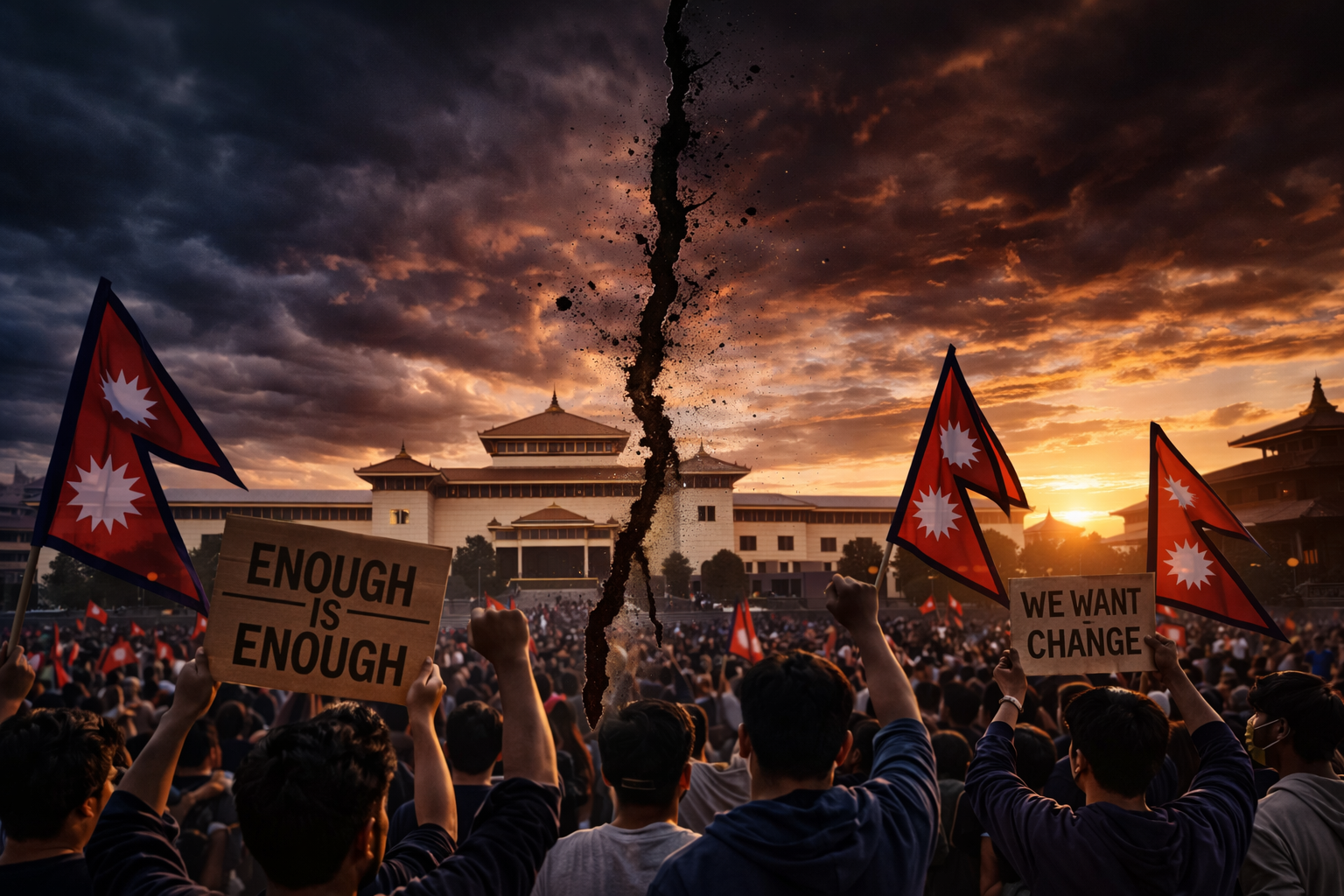
Before this political shift became visible in elections, it had already erupted on the streets.
Between September 8 to 13, 2025, Nepal witnessed the Gen Z protests — a defining and deeply painful moment in the country’s modern history. What began as a youth-led movement quickly transformed into a nationwide expression of anger, frustration, and moral outrage.
The loss of 76 young lives during these protests did not just shock the nation — it broke something deeper. It forced society to confront a reality it had long tried to tolerate.
But these protests were not the beginning of frustration.
They were the eruption of it.
For decades, ordinary Nepalis have carried a silent burden. Nepal remains one of the poorest nations in the world, where for many people, daily life is not about growth, but about survival. Employment opportunities are limited, systems are inefficient, and political instability has made long-term progress feel uncertain.
This frustration did not emerge suddenly.
It accumulated — slowly, quietly — like pressure building beneath the surface.
The Gen Z movement was not the cause of the political earthquake.
It was the explosion of a volcano that had been forming for generations.
A Society That Changed Faster Than Its Politics
One of the deepest reasons behind Nepal’s political earthquake is that Nepali society has changed much faster than Nepali politics. Migration, foreign employment, education, media exposure, social platforms, and global communication have transformed how people see opportunity, dignity, and the role of the state.
A younger generation now measures leadership differently. It is less impressed by old revolutionary credentials, less moved by speeches about sacrifice, and less willing to wait another decade for basic improvements. The world is visible in every phone. Standards have changed. Aspirations have changed. But much of Nepal’s political culture has continued to behave as if the public can still be managed by slogans, alliances, and symbolic promises.
That gap - between a changing society and a stagnant political culture - is one of the real causes of this moment.
The Weight of Instability
Nepal’s democratic journey is historic and admirable, but it has also been painfully unstable. Since the republican era began in 2008, the country has seen around fourteen governments in roughly seventeen years, and no government has completed a full five-year term. That is not just a constitutional problem. It is a development problem, a trust problem, and a psychological burden on society.
A country cannot build momentum if every few years, or sometimes every few months, the governing equation changes, priorities shift, and public energy is consumed by political bargaining. Every leadership collapse resets progress. Every new coalition raises hopes only to exhaust them again. Over time, instability becomes more than a parliamentary issue. It becomes a way of life, and people begin to assume that nothing durable can ever be built.
When the Old Guard Lost Moral Authority
Sher Bahadur Deuba, KP Sharma Oli, and Prachanda are not small figures in Nepal’s political story. Each of them came to power through struggle, experience, party machinery, and public support. At one stage, many citizens saw them as leaders who could help build a better Nepal.
That is precisely what makes the current disappointment so deep. The public frustration is not only about age. It is about what went wrong after power was gained. Too often, politics began to look less like public service and more like power preservation. Leadership became self-centric. The focus appeared to shift from national transformation to personal survival, family influence, loyal circles, and control over state mechanisms.
Many Nepalis no longer saw sacrifice. They saw entitlement. They no longer saw strategic leadership. They saw recycled bargaining. They no longer heard a moral vision for the country. They heard the same promises from people who had already been tested for years. That is how moral authority erodes - not in one scandal, but through repeated disappointment.
From Public Mandate to Private Comfort
A painful question sits underneath Nepal’s political crisis: how did leaders who once carried public hope become so distant from public pain?
Part of the answer may be that power gradually stopped being treated as responsibility and started being treated as possession. Instead of asking what the country needed, too many political actors appeared to ask what could be secured for themselves, for loyalists, and for their families. Public office started to look less like a duty and more like a reward structure.
This perception becomes especially damaging when important appointments appear to be driven by proximity rather than merit. When the spouse of a prime minister can rise to one of the country’s highest diplomatic offices, many citizens naturally ask a hard question: is the state rewarding competence, or rewarding closeness to power? Whether every such appointment is defensible on paper is not the only issue. The deeper issue is what message it sends to society. It tells ordinary people that access may matter more than merit.
That is how a nation’s reputation weakens - not only internationally, but morally from within.
The Collapse of 'Right Person, Right Place'
No country can progress if the principle of right person, right place is constantly compromised. No institution becomes strong when loyalty is valued above competence. And no democracy stays healthy when the idea of reward and punishment is applied selectively - generous toward the connected, harsh toward the powerless, and absent toward the irresponsible.
Nepal’s frustration did not emerge only because politicians were accused of corruption. It emerged because the system often seemed unable to distinguish between performance and patronage. Capable people were frequently sidelined. Mediocrity survived because it was politically useful. Failure was recycled instead of corrected. Accountability was delayed, diluted, or negotiated away.
That creates something more dangerous than anger. It creates learned helplessness. Citizens begin to believe that no matter how educated, honest, or capable they are, the system will still favor networks over merit. When that belief spreads deeply enough, the social contract begins to rot.
Why Balendra Shah (Balen) and Ravi Lamichhane Became Symbols of Change
That is why figures such as Balendra Shah (Balen) and Ravi Lamichhane were able to capture public imagination so quickly. They did not rise only because they were younger, media-savvy, or skilled at messaging. They rose because they stood outside the old emotional structure of Nepali politics. They gave people a way to say: enough.
Balendra Shah (Balen) represented disruption. He looked like someone who had not been shaped by the old habit of permanent compromise. Ravi Lamichhane represented another type of outsider energy - a figure with public recognition, communication strength, and anti-establishment appeal. Together, they came to symbolize the possibility that the country did not have to remain trapped in the same circle forever.
Whether they can fully deliver is a different matter. But politically, their rise made sense because they embodied what the old order no longer could: urgency, freshness, and the language of accountability.
Why Gagan Thapa Still Matters
Gagan Thapa occupies a different political space. He is not part of the outsider wave in the same way as Balendra Shah (Balen) or Ravi Lamichhane, but he also does not fit comfortably into the public image of the old guard. For many Nepalis, he represents reform hope inside a traditional party structure.
That matters. Nepal’s future will not be shaped only by outsiders defeating insiders. It will also depend on whether reform-minded leadership can still emerge from within established institutions. If parties such as Nepali Congress want to survive with credibility, they must prove that internal renewal is real, not cosmetic. Figures like Gagan Thapa matter because they test whether change can come from inside, not only from revolt outside.
The Hardest Question: Are We Also Part of the Problem?
At some point, the national conversation must become uncomfortable. It is not enough to ask why politicians failed. We must also ask why the system kept rewarding failure. Why did nepotism become normal? Why did patronage become tolerated? Why did so many people adapt themselves to a culture they privately criticized?
This is the deeper question Nepal must face: have we, as a society, also become compromised from the inside? Not because every Nepali is corrupt, but because too often we excuse what benefits us, ignore what does not touch us, and condemn only when we are no longer included.
If we want a different politics, we must also cultivate a different civic culture. Every Nepali should be able to look inward and ask: do I only criticize corruption above me, or do I also reject favoritism, shortcuts, and silence in my own life? National renewal cannot be built only by replacing leaders. It also requires moral seriousness in society itself.
Hope Must Be Strong - But Not Blind
Nepal’s political earthquake has opened a door, but doors do not walk by themselves. Public hope is powerful, but hope without vigilance becomes another cycle of disappointment. The country has seen waves of expectation before. It has seen leaders rise on public hunger and later reproduce the same habits they once condemned.
That is why today’s optimism must be balanced with critical awareness. New faces should be welcomed, but not worshipped. The public should support reform, but it should also demand results. No leader - old or new - should be treated as above scrutiny. If Nepal does not build a culture of accountability now, history can repeat itself under new branding.
Conclusion
Nepal’s political earthquake was not only about who won and who lost. It was about what the public was trying to say. It was a rejection of repetition. It was a protest against instability, patronage, and political self-interest disguised as national service. It was also a cry for dignity, merit, and a future that feels possible.
Balendra Shah (Balen) and Ravi Lamichhane came to symbolize the public demand for change. Deuba, Oli, and Prachanda came to symbolize, for many citizens, an old order that had lost credibility. Gagan Thapa remained a sign that reform may still be possible even within traditional politics.
But the final lesson is bigger than all of them. Nepal must not only ask whether its leaders have failed. It must also ask what kind of political culture it is willing to tolerate from now on. The next chapter will not be decided by speeches alone. It will be decided by whether the nation finally chooses merit over access, accountability over loyalty, and public duty over private comfort.
That is where hope becomes real.